
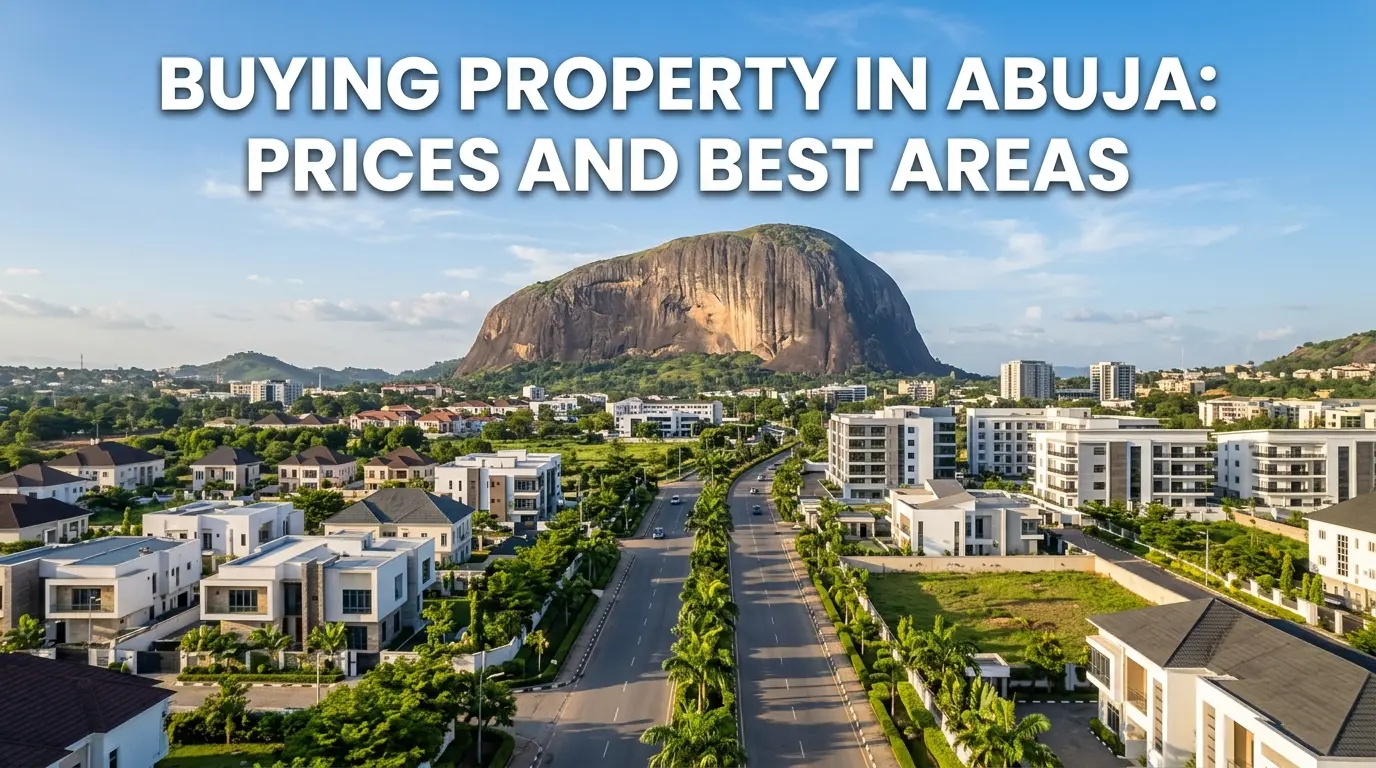
Welcome to the future of Nigerian real estate. As we navigate through 2026, Abuja's skyline continues to evolve, reflecting a sophisticated blend of modernist architectural design, robust urban planning, and increasing foreign and domestic investment. The Federal Capital Territory (FCT) remains a premier destination for high-net-worth individuals (HNWIs), diaspora investors, and institutional developers.
Whether you are a house seeker looking for a biophilic-designed family home or a real estate team curating a high-yield portfolio, navigating the Abuja property market requires hyper-local data, market intuition, and tech-driven insights.
In this ultimate guide, brought to you by Realinkr Nigeria's leading real estate marketing platform we dissect everything you need to know about buying property in Abuja in 2026. From the nuances of land titles at AGIS to neighborhood price metrics, this is your blueprint for success.
Why Abuja? The Core Drivers of FCT Real Estate
Before diving into the numbers, it is crucial to understand why Abuja commands such a premium in the West African real estate landscape. Unlike organic cities that grew out of trade hubs, Abuja is a meticulously planned city, governed by the Abuja Master Plan.
1. Capital City Stability and Infrastructure
Abuja offers a level of political and economic stability rarely found elsewhere in the region. The city benefits from unparalleled federal infrastructure, boasting wide, well-paved boulevards, reliable independent power grids in premium zones, and a robust sanitation system. For investors, this translates to property value preservation. When you buy into Abuja, you are buying into the administrative heartbeat of Africa's most populous nation.
2. FCT Land Title Security
The FCT operates one of the most digitized and secure land registries in Nigeria, the Abuja Geographic Information Systems (AGIS). Because all land in the FCT is ultimately vested in the Federal Government (administered by the FCT Minister), the incidence of "Omo Onile" (land grabbers) is drastically lower compared to Lagos or Port Harcourt. This institutional security provides immense peace of mind for diaspora buyers.
3. Surging Expatriate and Diplomatic Demand
Areas like Maitama, Asokoro, and Wuse II are home to embassies, multinational corporations, and NGOs. This concentration creates a perennial demand for high-end, secure, and luxury-finished residential units. The rental yields in these diplomatic enclaves remain highly attractive, often commanding payments in foreign currencies or premium Naira equivalents.
Realinkr Pro Tip: Properties designed with smart-home automation and sustainable energy solutions (like integrated solar roofing) are currently experiencing a 15-20% higher rental yield among the expat community in Abuja.
Property Prices by Area (2026 Market Data)
To make informed investment decisions, you need accurate, up-to-date data. The 2026 Abuja market has seen a steady appreciation, driven by inflation hedging and infrastructural expansions into the suburbs (Phases 3 and 4 of the Master Plan).
Below is a comparative breakdown of key neighborhoods. (Note: Prices are average estimates in Naira (₦) as of mid-2026 and can vary based on finishing, exact location, and architectural pedigree).
Neighborhood / District | Average Price per SQM (Land) | Typical Cost: Premium 3-Bed House | Market Persona & Vibe |
Maitama / Asokoro | ₦1.2 Million - ₦2.5 Million+ | ₦500M - ₦850M+ | Ultra-luxury, Diplomatic, Exclusive, Generational wealth |
Wuse II | ₦800,000 - ₦1.5 Million | ₦350M - ₦550M | Commercial hub, Cosmopolitan, Fast-paced, High rental yield |
Life Camp | ₦300,000 - ₦500,000 | ₦180M - ₦320M | Quiet, Expatriate-heavy, High security, Scenic views |
Gwarinpa | ₦180,000 - ₦300,000 | ₦130M - ₦220M | Bustling, Mixed-use, Massively popular, "City within a city" |
Karsana | ₦90,000 - ₦160,000 | ₦95M - ₦140M | Emerging, Affordable luxury, High ROI, Massive development |
Airport Road (Lugbe) | ₦60,000 - ₦120,000 | ₦65M - ₦95M | Logistics hub, Diaspora favorite, Rapid growth, Airport rail corridor |
Certificate of Occupancy (C of O) vs. Right of Occupancy (R of O)
One of the most critical aspects of buying property in Abuja is understanding land documentation. Due to the Land Use Act of 1978, all land in the FCT is held by the Federal Government. Therefore, you do not "own" land in perpetuity; you hold a lease.
The Right of Occupancy (R of O)
An R of O is the initial grant issued by the FCT Minister to an individual or corporate body, giving them the right to occupy and use a specific plot of land.
- Pros: It is a legitimate government allocation.
- Cons: It is not a fully perfected title. Banks rarely accept an R of O as collateral for a mortgage, and the land remains susceptible to revocation if development conditions aren't met.
The Certificate of Occupancy (C of O)
The C of O is the ultimate, perfected legal document. It is issued after the holder of an R of O has met all statutory requirements, paid all necessary fees, and commenced development.
- Why Buyers Need It: A C of O guarantees your 99-year leasehold. It is globally recognized, fully bankable, and offers maximum legal protection.
Realinkr Market Insight: When browsing properties on the Realinkr platform, buyers can use advanced filters to search exclusively for properties with perfected C of O titles, saving weeks of legal back-and-forth.
Property Taxes in the FCT
Owning property in Abuja comes with civic responsibilities. Understanding these levies ensures you don't face sudden municipal penalties or legal encumbrances.
- Ground Rent: This is an annual tax paid to the FCT Administration by every titleholder. It validates your continued lease of the land. Failure to pay over consecutive years can lead to the revocation of your title.
- Tenement Rates: Collected by the Area Councils (e.g., Abuja Municipal Area Council - AMAC), this is a property tax levied on developed real estate. It is calculated based on the assessed value of the building.
- Capital Gains Tax (CGT): When you sell a property in Abuja, you are subject to a 10% CGT on the profit made from the sale, payable to the Federal Inland Revenue Service (FIRS).
- Stamp Duties: Paid during the perfection of the title transfer, usually calculated at a percentage of the property's sale value.
(For a deep dive into calculating these costs, check out our comprehensive guide: Navigating Property Taxes in Nigeria .)
Top Estates and Developments to Watch
Abuja’s real estate is heavily concentrated in planned estates, which offer communal security, shared amenities, and uniform architectural standards. Here is where savvy buyers are looking in 2026:
Lifecamp
Originally developed to house the expatriate staff of construction giant Julius Berger, Lifecamp has evolved into a premier residential node. It is characterized by wide, tree-lined streets, large plot sizes, and a high concentration of bespoke contemporary villas. It is the perfect enclave for families seeking tranquility without the exorbitant price tag of Maitama.
Gwarinpa
Famed as the largest single housing estate in West Africa, Gwarinpa is a city within a city. In 2026, it will remain the ultimate middle-to-upper-class melting pot. It boasts a thriving commercial corridor along 3rd Avenue, making it highly attractive for young professionals and investors looking for high-turnover rental properties.
Karsana
Located in Phase 4 of the Abuja Master Plan, Karsana is the current darling of real estate developers. As infrastructure extends outward, Karsana offers affordable luxury. Here, you will find modern terrace duplexes and smart-home apartments. Investors buying into Karsana today are positioning themselves for substantial capital appreciation over the next five years.
Airport Road (Lugbe Axis)
The corridor connecting the city center to the Nnamdi Azikiwe International Airport is experiencing explosive growth. Estates in this axis are highly favored by diaspora buyers who want a "lock-and-leave" property close to the airport. The architectural style here leans heavily towards gated, mid-density townhouses with communal solar grids.
How to Verify Land Documents in Abuja (AGIS Checks)
Due diligence is non-negotiable. Before you transfer a single Naira, you must verify the property’s status at the Abuja Geographic Information Systems (AGIS). Here is the standardized 2026 checklist for buyers:
- Step 1: Obtain the Owner’s Consent. You cannot conduct a legal search without the explicit, written consent of the current titleholder. You will also need a photocopy of the title document (C of O or R of O).
- Step 2: Pay the Official Search Fee. Generate a Remita Retrieval Reference (RRR) and pay the official search fee to the FCTA via designated banks.
- Step 3: Submit to the Legal Desk. Submit your application, the consent letter, and payment receipt to the AGIS legal department.
- Step 4: Analyze the Search Report. The AGIS report will reveal the true owner, the size of the plot, the designated land use (residential vs. commercial), and crucially, if there are any encumbrances, caveats, or unpaid ground rents.
- Step 5: Physical Inspection. Never buy based solely on a legal search. Conduct a physical chart-out with a registered surveyor to ensure the coordinates on the document match the physical land, avoiding costly overlaps.
Working with a Real Estate Agent in Abuja
The Abuja market is vast, and despite its digitization, it still relies heavily on localized knowledge. Working with a professional real estate agent or brokerage is highly recommended to navigate the nuances of district zoning and off-market deals.
What to Expect
- Agency Fees: Standard agency fees in Abuja range from 5% to 10% of the property's purchase price.
- Legal Fees: Expect to pay an additional 5% to a property lawyer for drafting the Deed of Assignment and facilitating the transaction.
The Realinkr Advantage for Teams and Buyers
Historically, the Nigerian real estate market has suffered from fragmentation. House seekers dealt with outdated listings, while real estate teams struggled to manage leads effectively.
Realinkr changes the game.
For real estate teams and brokerages in Abuja, Realinkr’s ecosystem offers seamless lead tracking, advanced team management capabilities, and lightning-fast listing speeds. You can upload a visually rich portfolio of Maitama villas or Karsana terraces, assign leads to specific team members, and track the buyer's journey from inquiry to closing.
For house seekers, Realinkr empowers you with lifestyle data, market insights, and tech-driven property finding. You are no longer guessing; you are making data-backed decisions based on verified listings.
Conclusion: Your Next Step in the Abuja Market
Buying property in Abuja in 2026 is an exercise in strategic foresight. Whether you are acquiring a legacy asset in Asokoro or tapping into the high-yield potential of Airport Road, understanding land titles, tax obligations, and market metrics is your key to a secure investment.
The city's Master Plan is unfolding beautifully, and there has never been a better time to position yourself in Africa's most prestigious capital.
Ready to make your move? Don't navigate the market in the dark. Experience the future of property hunting with Nigeria's leading tech-driven real estate platform.
Deploy Algorithmic Buyer Acquisition on Your Portfolio
Accelerate sales velocity, reduce Cost Per Qualified Lead (CPL), and access verified high-net-worth buyers with Realinkr’s proven data infrastructure.